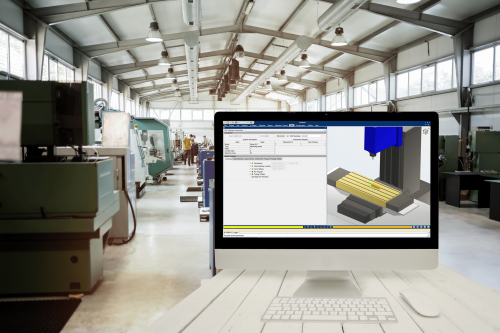
metalworking-cnc-milling-machine-monitoring-unattended - SFA

Affordable sensors, machine-monitoring software and smarter automation are bringing lights-out operations within reach for manufacturers of all sizes today – and pushing IT and Operations leaders to rethink what “unattended” really means.

Nocturnal Machine Unattendance

When the clock hits midnight at KAD Models in Vermont, a manufacturer that specializes in CNC machining, silicone molding and urethane casting, the work of its FANUC M-710iC/50 robot is in full swing but the lights stay off. FANUC America shares that the company’s programmers prove out prototype parts during the workday and then set up the machines to run at night, eliminating the need for a second or third shift. Completed parts neatly await the programmers in the morning.

Across the United States, manufacturers in sectors like heavy equipment, aerospace and automotive are increasingly experimenting with “lights-out” production – or at least “lights-dim” or “lights-sparse” operations, which involves a measured approach to “identifying specific processes, areas within a facility, or time blocks during production where crewless operation is both feasible and valuable,” explains Siemens. While fully autonomous factories remain rare, the building blocks are now accessible: low-cost industrial sensors, machine monitoring software and connectivity hardware that can turn even decades-old equipment into data-generating assets around the clock.

Those experienced with dark factory operations issue a word of caution for first-time forays. Matsuura product manager Tyler Bonde says, “Not every job is a candidate for unattended machining.” He suggests those jobs that involve uncertainty should be run during the day with an operator nearby so that lower value work can be run at night, when automation can make its biggest impact.

Evolution of Equipment Autonomy in Dark Factories

The maturity of modern machine monitoring is one of the biggest enablers. Solutions that once required expensive (and extensive) deployments can now be installed in hours, even on legacy machines, and offer flexible, month-to-month subscriptions rather than multi-year contracts.

Engineering testing for lights out machine monitoring manufacturing facility - SFA

If you’re testing or already engaged in unattended manufacturing, a lights-out machine monitoring strategy is critical to shed light on and protect your equipment operations around the clock.

Of course, equipment monitoring is not a prerequisite for lights-out manufacturing.

“You can certainly run unattended operations without machine monitoring,” says Greg Mercurio, president of manufacturing systems integrator Shop Floor Automations (SFA). “But you’re absorbing a lot of risk and undue stress if a job deviates from the program, a machine breaks down and no one is alerted until it’s too late. Manufacturing lights-out without monitoring your equipment is like operating your plant without a fire alarm. Why gamble with your machines, the job itself, materials and your customer relationships when you don’t have to?” asks Mercurio.

Today’s equipment monitoring platforms, like DataXchange, pull data through MTConnect adapters, wireless sensors, or direct wiring to controllers. This means IT directors can rely on secure edge networking and properly governed data flows, not massive infrastructure rebuilds. And Operations leaders gain the insight they’ve been craving to fully understand: “Which machines can safely run unmanned?,” “Where is tool wear most predictable?,” and “Which processes need tighter parameters?”

Safeguarding Your Lights-Out Investment

metalworking-cnc-milling-machine-unattended - SFA

Committing to a lights-out manufacturing approach for any facility requires “extensive planning, the best equipment, experienced machinists and a commitment to quality to reap any benefits,” explains Ohio-based Advance CNC Machining, which boasts machining capabilities for up to 14 hours unattended depending upon the part. As a result, the company can offer shorter lead times and attractive pricing – adding to their competitive advantage.

For those looking to safeguard their investment in lights-out, SFA’s Mercurio recommends a simple progression:


  1. Instrument prioritized machines with monitoring and sensors by working with an experienced manufacturing integrator, such as SFA, for stable automation of your operations and preventive and predictive maintenance. This includes using sensor data for vibration, coolant monitoring and planned tool changes to avoid unplanned downtime overnight.
  2. Standardize data across cells using MTConnect or OPC UA.
  3. Automate material handling or tool changes for predictable jobs. Lights-out should initially focus on proven, repeatable programs that require minimal human intervention and have predictable tooling and material characteristics. More complex, high-variability work can remain on attended shifts until process knowledge and confidence improve. This staged approach reduces risk and creates reliable repeatability before scaling to full shifts or multiple cells.
  4. Pilot an unattended shift on one machine, then scale outward. Treat lights-out as an ongoing program rather than a single installation. Monitor KPIs such as OEE, uptime, scrap rate, tool life and unattended-shift throughput. Use the data to fine-tune processes, expand automation in phases and introduce advanced capabilities, such as automated inspection or material handling, when the foundational pieces are stable. The goal is not simply to run at night, but to run smarter every month.

“You can certainly run unattended operations without machine monitoring. But you’re absorbing a lot of risk and undue stress if a job deviates from the program, a machine breaks down and no one is alerted until it’s too late.”

The payoff of dark factories is compelling: higher throughput, fewer overtime hours, reduced errors and waste driven by machine precision, less safety risks and the ability to run profitable second or third shifts without adding headcount. For manufacturers considering lights-out operations – or those already running a dark factory – contact SFA to learn how your teams can illuminate equipment visibility to protect your operations 24/7/365.

Broadening your machine monitoring strategy allows your operations to shift from a disconnected silo to an integrated, data-rich narrative in which every machine can talk, and every team can listen.

Factories today tell a story in two halves: a tale of gleaming, modern CNC machines streaming data to dashboards, paired beside older, time-tested equipment that hums reliably but remains invisible in the eyes of digital monitoring systems. This schism is more than just technological nostalgia; it’s a blind spot costing manufacturers in ways they may not realize, as revealed in Scytec Consulting’s recent webinar, “Machines You Didn’t Know You Can Monitor.”

The Hidden Side of the Shop Floor

Step into any production facility and the contrast is clear. While the latest machines report their every move in real time, legacy mills, fabrication lines, robot cells and even conveyor belts and pumps operate undetected in the data landscape. These machines, lacking modern interfaces, are often sidelined, assumed too challenging or insignificant to monitor.

Legacy equipment monitoring isn't often a priority, as older machines are assumed too challenging or insignificant to monitor. But the cost of their invisibility accumulates.

Legacy equipment monitoring isn’t often a priority, as older machines are assumed too challenging or insignificant to monitor. But the cost of their invisibility accumulates.

But the cost of their invisibility accumulates. OEE (Overall Equipment Effectiveness) metrics become skewed, operational bottlenecks stay hidden and teams are caught off guard by downtime events cascading from an unmonitored corner of the shop. For IT managers, partial visibility can undermine confidence in analytics. For operations leaders, unexpected downtime remains a persistent mystery in which the root cause has yet to be fully identified.

Enabling Every Machine to “Talk”

The paradigm is shifting – thanks to advances in edge devices and versatile data collectors. Today, relays, signal converters and IoT sensors can harvest signals from even analog presses and decades-old mills. Ethernet isn’t the dividing line; devices can now translate run/stop signals, power use and vibrational cues into actionable intelligence. The Scytec webinar demonstrated that the tracking of an elevated temperature of thermocouples can trigger graduated alarms to key stakeholders on and outside of the shop floor. These alarms can prompt actions to decipher likely causes and next steps for the operator, maintenance and management for continuous improvement.


These innovations turn the challenge into opportunity. IT departments can transition from mere system guardians to champions of digital transformation, unlocking insights previously lost in the noise of unending support tickets, safeguards against ransomware, upskilling staff and so on. Operations teams, in turn, gain a richer, more complete perspective to underpin scheduling, planning and maintenance strategies – helping to answer the perennial questions of “How much capacity do I have?,” “Should I buy a new machine or hire more, and when?” and “Is this machine underutilized or better applied elsewhere?”


Even older conveyor belts and pumps can operate undetected in the data landscape without proper legacy machine monitoring.

Even older conveyor belts and pumps can operate undetected in the data landscape without proper legacy machine monitoring.

Prioritizing Legacy Equipment Monitoring

Given the flood of urgencies occurring on the floor each day, why does this matter now? There are three forces changing the game today:

  • Rising cost pressures: Margins across manufacturing sectors are narrowing due to tariffs, continued inflation and a tight skilled labor market, making blind spots in downtime and performance increasingly expensive. Over 70% of CEOs polled by Chief Executive agreed that increasing costs is their top challenge in 2025.
  • Simpler retrofits: What once required bespoke engineering can now be achieved with off-the-shelf hardware and rapid deployment with the expertise of a manufacturing integrator, like Shop Floor Automations. A well-established integrator enables manufacturers to not only source, vet and implement equipment monitoring solutions – but provides the in-depth service and support to properly wire PLCs into machines, such as a Haas Style 2/3 Light Tower.
  • Clamor for deeper data: Boards and executives are demanding sharper insights into OEE and capacity, in which partial answers (or “I don’t know” responses) are no longer acceptable. Harvard Business Review details how AI is now empowering the decision-making process of boards. “The board of one steel company used AI-generated simulations to help it decide between investing in an existing production facility or building a mill in a new geography,” wrote authors Stanislav Shekshnia and Valery Yakubovich. Data can be made available throughout the enterprise; now it’s a matter of who, what, when, how and why.

The ROI becomes tangible as more machines join the network: surprises diminish, planning gains precision and proactive maintenance can catch issues before they become costly crises. “We’ve seen an approximate 10% increase in efficiency across the board,” says Reyes of his machine monitoring approach at MOGAS, a manufacturer of severe service ball valves for industrial applications.

Retrofitting legacy equipment for monitoring has become simpler, thanks to advances in off-the-shelf hardware and rapid deployment from manufacturing integrators, like Shop Floor Automations.

Retrofitting legacy equipment for monitoring has become simpler, thanks to advances in off-the-shelf hardware and rapid deployment from manufacturing integrators, like Shop Floor Automations.

Take Action

To start exposing your blind spots, Scytec provided the following recommendations for manufacturers with a mix of legacy and modern equipment on the shop floor today:

  1. Audit your shop: Spotlight machines that currently fly under the radar.
  2. Target quick wins: Focus first where downtime creates clear pain.
  3. Run pilots: Test solutions on a small cell or line before a full rollout.
  4. Validate and expand: Confirm the data’s accuracy, then scale methodically while keeping operators in the loop.
  5. Value incremental progress: Even modest expansions can quickly uncover hidden inefficiencies and deliver payback.

The Future: Connecting Old and New

True smart manufacturing isn’t just defined by the newest, shiniest equipment on the floor – that simply isn’t cost-effective for most manufacturers. Smart manufacturing is built on bringing every piece of the fleet, old and new, into the conversation. Each previously unmonitored machine adds a vital clue to the puzzle of shop floor performance.

As manufacturers broaden their monitoring strategies, the story shifts: from disconnected silos to an integrated, data-rich narrative in which every machine can talk, and every team can listen. Contact manufacturing integrator Shop Floor Automations to explore your connectivity options today.

Equipment monitoring software for maintenance

Downtime – and the response time to it – continues to plague manufacturers across the United States. A 2022 Siemens report revealed that a typical large plant “still loses 25 hours a month to unplanned downtime.” They estimate the cost of an hour of downtime to be $500,000 for oil and gas companies, which makes downtime quickly cost millions.

As a result, teams are responding by gathering internal technical requirements, evaluating off-the-shelf machine monitoring solutions and attempting trial implementations. Top machine monitoring solutions will capture data from new and aged CNC equipment and deliver trends and reports using configurable dashboards via modern communication tools, like text and Microsoft Teams, to help you pinpoint production bottlenecks and machine condition degradation for improved Overall Equipment Effectiveness (OEE), quality control and profitability.

CNC machine monitoring for downtime monitoring

But there are hundreds of available equipment monitoring software solutions today, ranging from Predator Software to Scytec DataXchange and beyond, and the equipment monitoring market itself is projected to reach 220.92 million USD by 2031. This makes the vendor decision-making process all the more onerous and lengthier, particularly for time and labor-constrained companies. Some manufacturers are instead taking on a Do-It-Yourself (DIY) approach by assembling internal and/or outsourced developers, collaborating with various departments and rolling out a custom solution. There’s an attraction to this path, but is it truly the right way toward achieving more uptime, better operator performance and greater profits?

If you’re considering or already headed in this direction, you very well may consider the positive and negative aspects of DIY equipment monitoring development to fully validate your decision. As a manufacturing integrator experienced in helping manufacturers search, select and implement the ideal machine monitoring software solution for your business, the experts at Shop Floor Automations have compiled a comprehensive list to aid your research below. We welcome your comments on other advantages and disadvantages that factor into your own machine monitoring evaluation.

The Pros of DIY Equipment Monitoring Software Development

  • Potentially less upfront cost. When your teams develop equipment monitoring software in-house, you’re not likely to incur the recurring software subscription or license fees demanded by software vendors. Software subscription revenues are anticipated to grow by a CAGR of 16.6% reports EY, as enterprise technology companies continue to shift away from a perpetual software license model. You also have the benefit of leveraging existing programmable logic controllers (PLCs) without upfront costs for hardware and training to program it.
  • Built your way. Machine monitoring software designed for your business can be customized to accommodate your specific business processes, equipment types, locations, unique terminology and standards, integrations and more. You’re not forced to adapt to the user interface, limitations and future development of a commercial application geared for a mass of users.
  • Vendor neutral. A DIY equipment monitoring project allows you to be in control, deciding who is involved and how the system and data is maintained, supported, secured and located. Conversely, a machine monitoring software provider will often dictate the supporting partners and underlying ecosystem available with the solution – which can require data hosted by their third-party provider.
  • Fringe benefits of familiarity. When you’re able to dedicate your resources to your own project, you can command your own timetable, training program and the coordination of subject matter experts. There’s less of an educational barrier, too, as teams should be familiar with the corporate nomenclature, key personnel and strategic priorities. The purchase of a commercial application like equipment monitoring software, however, means you are beholden to the skills, bandwidth, language and processes of the technology provider and the demands of their existing customer base.

The Cons of DIY Equipment Monitoring Software Development

  • Susceptibility to higher Total Cost of Ownership (TCO) and other impacts. The TCO of your DIY equipment monitoring system goes beyond just IT salaries; often the continued energy costs, hardware, security, training, networking, backup, testing and more will make this project far more expensive than commercial applications. Your custom software would also likely be impacted significantly by change: budgetary constraints, shifts in strategic objectives and corporate systems and policies, personnel movements and other factors. As a dedicated technology business to many users, the commercial developer tends to better absorb and rebound from events like employee attrition and economic impacts.
  • Competing departmental prioritiesLess emphasis on contingency and continuity. As an internal project, DIY machine monitoring software can be more prone to decreased attention over time, particularly if the project champion has left for another opportunity or moved to another department. The software and its related documentation and training programs, then, are less likely to stay current or remain relevant as new technology and security protocols are introduced to the business, new machinery is acquired and older machinery is retired or networks are upgraded. In this age of rapid change, software that sits doesn’t help a bit.
  • Forfeiting best practices. Custom software, such as DIY machine monitoring, inherently lacks the benefits that come from applying industry best practices, including data trends across wide swaths of users and equipment types, new AI developments, the latest security standards and other technological advancements that require research, resources and large, varied datasets. The core competency of software vendors often affords them greater focus, expertise, budgets, data access and more to help customers refine their business processes through proven functionality.
  • Shouldering the burden of ongoing maintenance and improvements. New requests for features require manual updates to hardware when working with DIY machine monitoring software. Maintenance technicians, for example, have to update the PLC hardware to capture each additional signal desired by internal management. This step may need to be replicated for each machine tool, which can be time-consuming and requires additional documentation to capture every change. Commercial machine monitoring, on the other hand, enables configuration via a web browser without the need to physically walk to the equipment.

In this age of rapid change, software that sits doesn’t help a bit.

Custom machine monitoring applications tend to be rigid in design, requiring a multitude of support tickets to increase flexibility as users engage with the software over months and years. Commercial equipment monitoring solution providers, alternatively, configure the System Resource Controller (SRC) and deploy changes easily. Their solutions tend to be out-of-the-box configurable for user control of reports, charts, and dashboards based on your machine brands. Software developers also have streamlined processes in place to accommodate continued development schedules and software enhancement and integration requests.

A DIY approach to equipment monitoring software can appear practical, especially for manufacturers with in-house IT development. But it’s important to look beyond upfront factors to include the entire scope of such a project, so that your TCO encompasses all opportunity costs, barriers necessary to overcome and anticipated internal and external changes that will impact short- and long-term development. After all, a deviation from core competency can be a costly mistake for manufacturers already reeling from downtime and production loss.

IMTS 2024 attendees can visit Shop Floor Automations for manufacturing integration solutions and support

“Everything we have today is the result of going to Chicago, walking through those doors of IMTS, and seeing all the amazing technology. It’s a great atmosphere. It’s like walking into a living room that’s set up as a CNC shop with people smiling and ready to help you.” 

 — Ashley Miller, Co-owner, ARC EDM 

For those who attended the International Manufacturing Technology Show (IMTS) 2022, like Miller, they know that there was plenty to keep over 86,000 registrants from 110 countries interested in the 1,816 exhibitors. IMTS 2024 promises much more, with many new product launches and networking connections anticipated over the course of the six-day event.

Visit Shop Floor Automations at IMTS 2024 in Chicago

New Products, New Connections

ZOLLER (booth #432018), for one, plans to introduce its >>coraMeasure LG<< automated tool measurement system to improve tool measurement precision and speed by delivering tools to a linear robot that removes tools from the pallet and moves them to a ZOLLER >>venturion<< presetting and measuring machine. Each tool is identified with the ZOLLER >>dChip<< system and tool data is stored in the ZOLLER z.One database and accessible anywhere.

The new HAIMER (Booth #431510) Automation Cube One will also make its debut at IMTS 2024. This fully automatic robotic cell can shrink fit a tool, measure it and send the data to the machine tool in just 60 seconds. The Automation Cube One features a FANUC cobot for handling of tool assemblies and a Siemens Sinumerik One CNC control.

IMTS machine monitoring exhibitor Shop Floor Automations

DataXchange, available through IMTS machinoe monitoring exhibitor Shop Floor Automations, has released new protocol for supported equipment brands, including Okuma, Heidenhain and Siemens.

For those exploring machine monitoring and data collection solutions, Scytec Consulting (Booth #133240) has released new protocol for machine brands like Okuma, Heidenhain and Siemens to connect more data points for greater depth and analysis of equipment on the shop floor with its DataXchange equipment monitoring software. The added collection of Siemens spindle speed rates, for example, can help identify faults for better finish and surface quality due to consistent cutting speed at the tool cutting edge.

The partnership between Scytec and CGTech’s VERICUT® takes machine monitoring a step further through digital twins to simulate your manufacturing environment and identify the presence of variances before production begins on the floor, thereby minimizing or eliminating non-conformances and rework. Attendees seeking an IMTS machine monitoring exhibitor will have first access to the latest Post Check feature of CNC Machine Connect, in which users may replay stored, live-streamed data from the program for even greater visibility and predictive accuracy of your simulations.

IMTS 2024 attendees can visit Shop Floor Automations for manufacturing integration solutions and support

Greg Mercurio, president of manufacturing integrator Shop Floor Automations, says that “It’s the relationships that we start and build at IMTS that make the show such a vital experience. Not only are we able to demonstrate the latest advances in our technology portfolio, but our deep customer connections allow us to match the right solution and service to their environment so they can focus on their producing high-quality product.”

To plan your IMTS show with these exhibitors and others, visit www.imts.com.

Justify equipment monitoring

When optimal productivity and efficiency are attained on the shop floor, why carry on equipment monitoring efforts indefinitely?

When MOGAS, the leading manufacturer of severe service ball valves, began monitoring their equipment on the shop floor, they started realizing real value within the first two weeks.

“I was receiving frequent machine alerts with operator notes indicating ‘part move’ during tooling downtime for a part that was taking 8 hours to make,” says MOGAS Machine Shop Leadman Hector Reyes, who is a 9-year veteran of the company and handles router workflows to the machines. “After talking with the operator, I learned that the existing fixture was forcing numerous adjustments. By designing a new fixture to better hold the part, we were able to shave off about 5 hours of machine time.”

Monitoring Plateaus

Within a year of implementing the equipment monitoring solution, DataXchange, MOGAS saw a 62.5% decrease in machine time as a result of time-saving alerts and a 10% increase in efficiency. Tech Manufacturing, an ADDMAN company that specializes in medium-to-large, complex parts with tight tolerances, reported reaching an efficiency of 65 percent after bringing on its machine monitoring program. The goal was to achieve 70 percent, recounted Modern Machine Shop, but diminishing returns had started to set in and efficiency improvements were linked “to increasingly minor or increasingly rare events.”

Machine optimization

Within a year of implementing its equipment monitoring solution, MOGAS saw a 62.5% decrease in machine time as a result of time-saving alerts and a 10% increase in efficiency.

For manufacturers looking ahead – or currently experiencing high optimization with their machine monitoring system – how do you continue to justify the expense of such a solution once this state of near perfection is reached?

The answer is simple, says Greg Mercurio, president of manufacturing integrator Shop Floor Automations (SFA). “The optimization of your equipment is not a one-time process,” he says. “The condition of machines change over time: they’re impacted by fluctuating and extreme temperatures; wear and tear; the breakdown of their components; poor preventive maintenance and other factors.” While it can be tempting to think you’ve taken things as far as you can, there’s always the potential for deviation on the horizon. Mercurio explains, “Add in the changing workforce, new hires and a labor pool with mixed technical abilities, and you’ll still face the potential for errors and other issues.” Without consistent machine monitoring in place, those issues can go unnoticed over great lengths of time and threaten optimized states, potentially significantly.

Early Detection for Best Prevention

Justify equipment monitoringMercurio likens machine monitoring to a wearable fitness tracking device. “Even if you achieved your ideal weight, if you’re not monitoring your heart rate, fitness levels and sleep quality, you’re going to have a harder time detecting the signs of a heart condition or other potential health problem,” he says. “The same thing applies to machine monitoring. If you maximized your Overall Equipment Effectiveness (OEE) and stopped monitoring your equipment, it’ll be that much more difficult to proactively identify abnormalities or anomalies before they become major concerns.”

To learn how you can maximize your machine monitoring program for the long-term, contact Shop Floor Automations today.

Read the approach to machine monitoring software taken by Senior Aerospace AMT.

The Writing on the Wall

The indicators to diversify your customer base can present themselves in many ways to a company. Value Prop, a B2B strategy consultancy, defines “customer concentration” as when companies have more than 10% of revenue reliant on a single client – or if revenue portions greater than 10% rely on multiple single clients. For Senior Aerospace AMT, a leading manufacturer of commercial and aerospace parts, its single customer of the company – albeit, one of the largest aerospace companies in the world – made up approximately 90 percent of AMT’s business. The company spun this indicator into an opportunity to fine-tune its machining operations.

Aviation machine monitoring

While piloting the DataXchange machine monitoring solution, the AMT team decided to leverage the existing PCs at each work center so there wasn’t a need to train operators on new hardware in addition to new software.

Tom Anderson, AMT Machine Process Engineer, explained, “We wanted to know, how much time are machines broken down? Which machines need to be replaced over others, and when? At the same time, we wanted to get a full sense of our capacity.” Once this visibility was gained, he figured, there would be a better chance to determine potential improvements to cost effectiveness and quality in an effort to retain current business and attract new prospects.

“It was really easy, out-of-the-box. You can collect infinite types of data.”

AMT partnered with Shop Floor Automations (SFA), a California-based provider of hardware, software and technical expertise, for options. The DataXchange aerospace machine monitoring solution, by Scytec Consulting, was recommended after an evaluation of AMT’s requirements. “We wanted to walk before we run,” he noted, sparking a pilot approach to the implementation of the software. Six machines, some with tablets or bar code scanners, were connected by the IT team at AMT during the first phase of the pilot.

The Team Takes Off

“It was really easy, out-of-the-box,” he says. The tools and documentation available through the platform were enough for Anderson and his team to start setting up the program in-house. “You can collect infinite types of data, so we looked to simplify above all else.” For example, machine statuses were set up to indicate the lack of an operator.

Initially the team input 15-20 downtime options to select from; those options were then narrowed to 8-9 with a reason code and the ability to add a note for further information. At the same time, the team decided to leverage the existing PCs at each work center so there wasn’t a need to train operators on new hardware in addition to the DataXchange software.

Learn more about the approach AMT took with its aerospace machine monitoring software by accessing the full success story now.

The Value of Machine Monitoring

“Show me the money!” Those iconic words from the 1996 film, Jerry Maguire, may have been once uttered to prove client-agent commitment, but they also serve as a reminder that products should continually prove value to earn your business. Cloud machine monitoring software, which utilizes Industrial Internet of Things (IIoT) sensors to collect real-time data from your equipment on the shop floor, is no different.

The Value of Machine Monitoring

For manufacturers with a variety of aging and newer machines that span manual as well as advanced, 5-axis machining, such a software solution can be a valuable tool to help optimize operations and increase your return on investment (ROI) – particularly as workforce challenges remain pervasive and inflationary pressures weigh on your bottom line. Here are five ways that machine monitoring software can show you the money:

  1. Identify inefficiencies. With the help of a robust machine monitoring solution, you can identify inefficiencies in your production processes to make improvements and cut costs. One manufacturer knew that operators deployed overrides, but wasn’t aware of how long they were slowing down the machines as a result. Through the tracking of feed rates and overrides within a configurable dashboard in Scytec DataXchange, teams uncovered that machines were operating at 50% of normal speed for an extended period of time, well beyond the time that it should have taken to complete the part. Color coding and messaging added to the dashboard, as well as e-mail and text notifications, alerted key personnel when a slowdown occurred past five minutes to address the issue as it was occurring, thereby preventing unnecessary waste. By monitoring machine performance, communicating key data points and analyzing data, you can identify bottlenecks, downtime and other issues, like lengthy overrides, that are slowing down your operations.
  2. Predictive maintenance (PdM). You can also identify when maintenance is needed before a breakdown occurs through constant machine monitoring. The tracking of vibration analysis, hours run, oil analysis, thermal imaging and other data inputs can help you determine patterns in machine performance to, ultimately, avoid costly repairs and downtime, while also prolonging the lifespan of your equipment.
  3. Increase productivity. The visibility gained from machine monitoring software can assist with optimizing your production processes and increasing productivity. You can detect more efficient settings and processes to further reduce cycle times, increase output and maximize your Overall Equipment Effectiveness (OEE).
  4. Quality control. Machine monitoring software can also help you to improve the quality of your parts. The continuous capture of equipment execution can present real-time warnings as deviations occur to immediately correct the quality issue before the part moves onto the next operation.
  5. Energy efficiency. As shops continue to seek greener opportunities, equipment monitoring solutions serve to decrease energy costs. High-offending machines and energy usage trends can be pinpointed to implement energy-saving measures and reduce utility bills.

While there’s a number of ways to earn ROI from machine monitoring software, it’s important to have a clear understanding of your goals and exactly how machine monitoring can enable your teams to achieve them. It’s just as important to have the right manufacturing integrator, infrastructure and tools in place to collect and analyze the data, and to have a plan to address how your operations will apply the insights gleaned from monitoring – so your software solution can keep on showing you the money.

Best practices to implement machine monitoring

Whether you have seven machines or 70 pieces of equipment on your floor, there are best practices that manufacturers across industries can apply to get the most out of your machine monitoring journey. As a top implementer and supporter of equipment monitoring software, Shop Floor Automations (SFA) has helped hundreds of manufacturers throughout North America benefit from increased shop floor data visibility. Here’s our top three recommendations to follow:

  1. Begin with the end in mind. How will you gauge success for your team using machine monitoring, e.g. less downtime, decreased cycle time, greater productivity? While you may uncover more wins throughout your machine monitoring journey, setting 1-2 initial goals you aim to achieve with your new equipment monitoring software will increase your chances of realistically accomplishing them within your target time frame.
  2. Start small. As a relatively simple software to install, machine monitoring can be tempting to roll out to all your equipment immediately. Resist the urge. Large volumes of data can quickly overwhelm your resources, particularly as you’re just learning and configuring the application. Instead, establish a pilot program among a few key pieces of machinery over a particular time frame. You can install the DataXchange equipment monitoring service, for example, on one computer, like a desktop or server operating system, to collect and transmit your machine data to the cloud securely. Then the application can be installed on the PC of each user. All of the equipment in your pilot program will need to be connected to the network and DataXchange, and you’ll need to do the same for the Operator Data Interface (ODI) of the machine monitoring solution if you’re looking to have operators enter downtime reason codes, scrap part counts or send an e-mail. Once you’ve fine-tuned the program for the pilot group, you can easily expand it to the rest of your floor and other locations.
  3. Involve all. Machine operators, maintenance, engineering, quality, all the way through management and executive leadership should take part in the machine monitoring undertaking. The engineers at one aerospace company leveraged machine monitoring to track probing adjustments made to work offsets to begin building a historical reference. This way they can check what change to the offset may have had on a nonconforming part.
    CNC connect in the factory - Scytec DataXchange

    Once you’ve fine-tuned your machine monitoring program, like DataXchange, for a pilot group of equipment, you can easily expand it to the rest of your floor and other locations.

    By pulling in tool numbers, tool life, maximum tool life, the maximum load, average load and average and maximum vibration – and applying custom variables to know how far and how long that tool is running – the team better understands the result if something was changed to see if it made the output better, or if the machine is running less or more. Today the manufacturer continues to expand its usage of the system, including setting a monthly cadence to verify part standards in ERP to actual cycle times, to meet the needs of its C-suite. By involving each stakeholder, you widen the chance of adoption success as well as new potential opportunities for improvement.

These three best practices are just the beginning of your machine monitoring voyage toward improved profitability. To determine the best approach to implement machine monitoring for your business, contact an automation expert at SFA today.

2023 manufacturing integration planning

As manufacturers across North America spend time reflecting, strategizing, planning and budgeting for the year ahead, leaders are debating how to defend against disruption and strengthen their offense. It’s a great time to ask yourself: How did my department stay on track with its goals? In what ways was my team successful? Where did we go astray, and why? Did we “make bold investments in talent, technology, and innovation?” Forbes stresses that those manufacturers who made the right decisions post-crisis can be on the road to major rewards.

Leverage the Present for Future Success

The good news is that you don’t need to limit your action to these responses to just 2023. There are three strategic ways you can reallocate excess budget now to get a head start on your future goals and positive economic indicators, while minimizing what Deloitte refers to as “historic labor and supply challenges.”

  1. Invest in your team. What opportunities have your shop floor teams identified for efficiency gains? Are you looking to reduce the amount of NC program transfer time and effort to CNCs? Is the ongoing maintenance and changing of RS232 serial cabling consuming already-limited resources? By factoring in valuable team input into your automation strategy early and leaning on your preferred manufacturing integrator for execution, you can invigorate crews while making inroads to continuous improvement initiatives.
  2. Lock in your support and services. Workforce limitations can impede project timelines, particularly as more and more companies are turning toward automation to complement skilled labor. By securing manufacturing integration support and services prior to year end, you can rest assured that your priorities will stay the course – and faster than your competition.
  3. Map out a phased approach. If you’re looking to increase communication on the shop floor or reduce programming waste in the new year, there are tasks that can be completed prior to year end for an efficient and effective start. The piloting of a few machines or setting up of a network connection can be relatively smaller undertakings that can position your organization for success in the year to come. Robert Jackson, a manufacturing engineer at artificial lift manufacturer Flowco, decided on a phased approach to bring on Predator DNC with Shop Floor Automations. “We didn’t have a network at the time, so we chose to start with four machines for the first phase of our implementation,” explained Jackson. It took two days to set up the network wirelessly. Flowco then added 12 machines. Six months later, the company had hooked up 11 more machines to the Predator DNC network and are expecting to do the same to five more in the near future as a result of significant growth.

While next year can hold a lot of promise for companies making the right moves, Deloitte predicts that “supply chain issues including sourcing bottlenecks, global logistics backlogs, cost pressures, and cyberattacks will likely remain critical challenges in 2023.” The remaining part of 2022 can set the stage for success if planned out strategically. Contact SFA for help designing a budget to fit your strategic automation plans for 2023 today.

Three stacks of blocks: the shortest stack says "Cost", the middle stack says "Price", and the tallest stack says "Value". A person in the background is holding the "Value" block with two fingers.

As manufacturers continue to seek alternatives to overcome the labor shortage, automation remains at the core of corporate strategy. Automation priorities can take the form of cobot programming, networking CNC machines for NC program transfers and machine monitoring to capture and improve upon Overall Equipment Effectiveness (OEE), among others.

Machine monitoring can be a particularly attractive priority due to its low investment options, both in terms of pricing and connectivity, as well as rate of return. But, with so many choices available today, how do you decide what is the best machine monitoring solution for your manufacturing operations? You’ve come to the right place. As one of the leading manufacturing integrators in North America, Shop Floor Automations has over 24 years of experience in sourcing, installing and supporting shop floor technologies to keep your production lines moving optimally.

Three stacks of blocks: the shortest stack says "Cost", the middle stack says "Price", and the tallest stack says "Value". A person in the background is holding the "Value" block with two fingers.

After reading this blog posting, you’ll have a better sense of the significant differences between solutions and how to weigh those differences against your own key criteria to properly compare machine monitoring software.

Vetting Equipment Monitoring Software for Your Manufacturing Operations

In essence, machine monitoring software helps your manufacturing company to increase efficiency, productivity and profitability by automatically tracking the data your shop floor equipment produces when it’s running – and especially when it’s not. Not all machine monitoring is created equal, however. The list below shares some common distinctions related to equipment monitoring software and questions that should be a part of your vetting process as you compare machine monitoring software solutions.

  1. How can your software support legacy and manual machines? Modern equipment often comes equipped with “plug and play” connectivity, which can make the equipment monitoring installation a relatively simple process. Manual machines, like saws and grinders, and older CNC equipment, however, tends to lack these capabilities. Some machine monitoring solutions are not able to natively support this type of equipment at all. Other systems can but require extensive hardware and consulting to get the machine online. Even so, issues may prevail well after initial installation. These issues can necessitate further technical troubleshooting to consume valuable time and effort, and potentially delay your company’s ability to realize a favorable Return on Investment (ROI). By identifying the machine monitoring software that cannot support all of your existing equipment upfront, you lessen the likelihood of purchasing “shelfware,” that is, software that goes unused, a reference to the age when software came packaged in disks and was stored on physical shelves in offices.
  2. What are my licensing options? Software-as-a-service (SaaS) subscription models are ubiquitous these days, but that doesn’t mean they’re a fit for every manufacturing environment. An ideal machine monitoring system should offer transparent options – whether you need an on-premise deployment, multi-term pricing, various combinations of flexible user levels or user license scalability to accommodate demand peaks and valleys – to suit your unique needs. Most of all, your ongoing satisfaction should be guaranteed. If the machine monitoring solution isn’t meeting your requirements, you should have the freedom to end your usage within a 30-day period.
  3. Who connects, installs and supports my equipment monitoring solution? Your manufacturing operations can be complex; the implementation and support of your monitoring software shouldn’t be. The process of connecting equipment, particularly legacy or manual equipment, can take effort, time and personnel to initially set up – especially if the responsible parties lack expertise. There are also ongoing adjustments necessary, such as new equipment connections, the troubleshooting of any issues that arise, integration assistance and tweaks to processes to take advantage of software feature enhancements, that warrant the need for a manufacturing integrator to minimize disruption and keep your equipment data flowing.
A machinist stands tall in his machine shop after a hard day of work.

The process of connecting equipment, particularly legacy or manual equipment, can take effort, time and personnel to initially set up – especially if the responsible parties lack expertise. An experienced manufacturing integrator that can source, implement and support a scalable machine monitoring solution can serve as an effective resource to set up new equipment connections, troubleshoot issues that may arise and help integrate machine data with ERP, for example.

For these three reasons and more, you should see that a comparison of machine monitoring software ought to go well beyond functionality assessments. Both your equipment monitoring solution and manufacturing integrator should be able to adapt to the many changes your organization will undergo in the months and years to come – and be an essential part of that change. Learn more about how Shop Floor Automations is the entrusted integrator for manufacturers with 5 to 75-plus pieces of equipment by contacting a representative today.