


The Capacity You Already Own
Six-Figure Decision, Zero Floor Data: Are You Buying Capacity or Buying Around Bottlenecks?
The demand for new capital equipment among machine shops and other U.S. manufacturers increased to $672.7 million in June 2026 – representing a year-over-year hike of 56.8%, according to American Machinist. While this surge in spending signals high market confidence, it also masks a critical struggle on shop floors today: timing, justifying, and determining the true necessity of costly capital expenditure (CapEx) purchases.
When bottlenecks threaten on-time deliveries, operations teams usually dive into equipment use, labor performance and material inventory to figure out what’s really going on – and whether it’s just a one-off hiccup or a chronic problem.
But if a plant lacks floor connectivity, especially with a mix of older equipment and newer machines, getting clear answers turns into an exercise in guesswork. Between scattered data points, manual shift logs and gut feelings, it’s easy to see why teams caught in the middle of peak demand end up pulling the trigger on expensive new equipment they didn’t actually need.
The Flawed Manual CapEx Evaluation
When lead times tighten, disconnected operations typically follow a predictable manual process to justify expansion:
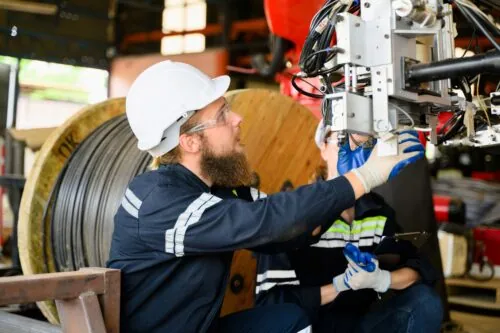
Major breakdowns make the shift log, but recurring micro-stoppages can erode daily production capacity one 3-to-5-minute delay at a time.
1. Paper vs. Reality Audits: Schedulers calculate theoretical machine availability on paper, assuming a machine scheduled for eight hours yields eight productive hours.
2. The Unseen Cost of Micro-Stoppages: Manual shift logs catch major breakdowns but miss recurring 3-to-5-minute delays, like waiting on tooling, loading programs or clearing chips. Unplanned downtime was reported several times weekly by 14% of plant maintenance leaders in the ABB Survey Report of 2023. Micro-stoppages, like these, can strip away hours of daily output.
3. The Labor and Overhead Trap: Adding new machinery requires dedicated floor footprint, utility load and hard-to-find-and-retain skilled labor. Buying equipment without maximizing current labor utilization multiplies fixed overhead.
4. Capacity Guesswork on Legacy Assets: Older machines sit underutilized or run below rated speeds. Lacking historical health trends, management debates whether re-engaging legacy assets pose a reliability risk, ultimately pushing a six-figure CapEx request to the C-suite.
Measure Before You Invest
Overall Equipment Effectiveness (OEE), as the numerical signal of Total Productive Maintenance (TPM), combines availability, performance and quality into a single measure. But capital planning should begin with a more practical question: where is your own equipment losing productive time? As a manufacturing integrator for over 25 years, Shop Floor Automations (SFA) recommends creating reliable shop-floor visibility before assuming that missed output requires another machine.
Connect the equipment and establish the data path. Assess each machine’s control, interfaces and network requirements, then apply the appropriate wired or wireless connection, legacy adapter or monitoring hardware. For example, SFA’s USB LAN Connect can support network-based CNC program transfer for a compatible older control with an RS-232 port.
Standardize programs and establish a baseline. For centralization of CNC program transfers, Predator DNC can reduce manual file handling altogether. Shops can then pair it with Minitab’s DataXchange to monitor run time, idle time, downtime and utilization across both legacy and modern equipment. Then review representative jobs and shifts using consistent definitions and operator-entered downtime reasons where machine signals do not provide enough context.
Improve the constraint and verify the gain. Use the baseline to identify recurring losses such as lengthy setups, tooling or material waits, inspection queues and maintenance issues. Assign corrective actions, then compare performance before and after each change under comparable conditions to determine whether recovered productive time is sufficient to meet demand.
Build the capital case around any remaining gap. If demonstrated capacity still falls short, document the limiting constraint, required throughput, measured output, downtime and maintenance history. Compare the costs and expected results of improving, upgrading or replacing existing equipment with those of adding a machine, so any CapEx request addresses a verified need and rests on defensible operating data.
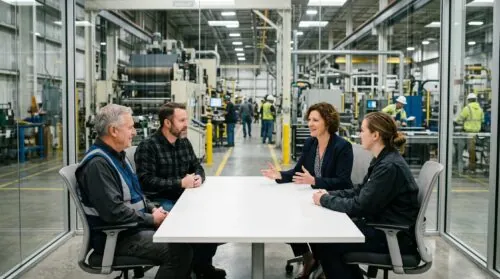
With full floor visibility, operations teams can weigh the true cost of upgrading or replacing existing assets against buying new. This grounds CapEx requests in measured output, downtime and maintenance data.
Uncover Your Plant’s True Capacity
Before your next equipment purchase, establish what your current shop floor can deliver. Start with the connections and performance data needed to identify losses, validate improvements and determine whether new capacity is justified.
Contact Shop Floor Automations today to design your connectivity and machine-monitoring approach to support continuous improvement and data-backed capital planning.