

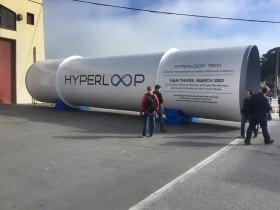
Customer Spotlight Blog: Hyperloop One
Hyperloop One We at Shop Floor Automations love to show appreciation for our customers. As a new blog series, we want to take the time to highlight certain customers and …
Real-Time Production Visibility • Sequenced Delivery Performance • Secure Manufacturing Infrastructure
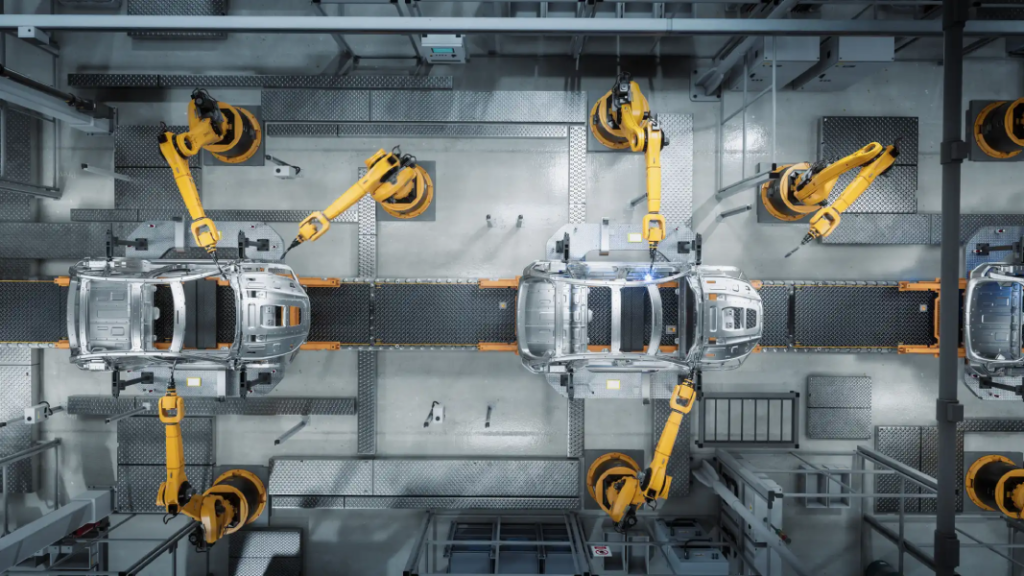
Transportation manufacturers and their tiered suppliers operate in environments where a single missed shipment or unplanned stoppage can cascade into a line-down event at an OEM assembly plant, carrying real financial and contractual consequences.
Across many facilities, engineering teams are balancing aging machine tools with newer automated cells, operations leaders are chasing takt-time and OEE targets, and IT teams are managing growing connectivity and cybersecurity requirements across every plant in the network.
Shop Floor Automations (SFA) helps bridge these priorities through machine connectivity, production intelligence and integrated manufacturing technologies that bring together equipment, operators and business systems into one connected environment.
Transportation-sector manufacturing often combines high-volume, sequenced production with strict OEM documentation requirements. Small disconnects between systems can create outsized operational and contractual risk.

Equipment Downtime Creates Line-Down Risk
Unexpected machine failures and idle equipment can trigger missed sequencing windows, contractual penalties and strained OEM relationships.
Older Machines Still Drive Production
Many facilities rely on legacy CNC equipment that continues producing critical components but cannot communicate with modern software environments.
Traceability Data Lives in Too Many Places
Lot- and shift-level production data frequently sits across spreadsheets, paper logs and disconnected systems, making PPAP submissions and OEM supplier scorecards harder to support.
Connecting OT and IT Remains Difficult
Manufacturers need production and traceability data flowing to quality and ERP systems without introducing additional complexity or cybersecurity exposure.
Knowledge Leaves Faster Than Documentation Can Keep Up
Manual program transfer processes and operator-specific workflows increase risk as experienced employees retire and new teams onboard.
Sequenced Production Requires Greater Agility
OEM demand changes, model-year transitions and platform launches require manufacturers to quickly adjust production priorities and prove available capacity.
SFA combines machine connectivity, production monitoring and implementation expertise to improve operational performance and traceability across your transportation manufacturing facilities.
Convert machine activity into measurable operational insights tuned to high-volume, sequenced production.
Manage manufacturing programs from a centralized environment that keeps every line running the released revision.
Extend the value of existing machine assets across the plant floor.
Create a more connected manufacturing ecosystem across plants and business systems.
Support OEM documentation requirements with traceable production records.
Support designed around your transportation production environment.
Manufacturing facilities serving transportation OEMs and Tier 1 supply chains often require shop floor systems that align with sequencing uptime expectations and internal IT standards.
SFA supports deployment approaches including:
SFA supports a range of transportation-related manufacturing operations, each with different machine assets, compliance needs and performance priorities.
| Segment | Key Challenges | SFA Solutions Applied |
|---|---|---|
| OEM ASSEMBLY & TIER 1 SUPPLIERS | Sequenced delivery and line synchronization | Predator MDC, DNC & PDM |
| POWERTRAIN & DRIVELINE COMPONENT MANUFACTURING | Precision machining and cycle time consistency | DataXchange machine monitoring with OEE dashboards |
| STAMPING & BODY STRUCTURE MANUFACTURING | High-volume throughput and press uptime | Predator DNC, MDC and Tracker |
| ELECTRIC VEHICLE & BATTERY COMPONENT MANUFACTURING | Production consistency and traceability | Predator DNC, MDC, Tracker and pWidgets Web-Client HMI |
| RAIL, TRANSIT & COMMERCIAL VEHICLE MANUFACTURING | Mixed machine environments and workflow standardization | DNC, machine connectivity hardware and services, ERP integration |

SFA's manufacturing experts review your machine inventories, controls, workflows and business objectives.
Deployment options and plans are aligned with operations and IT requirements.
SFA collaborates with your team to implement hardware and validate machine communications.
SFA technicians develop custom-built dashboards and integrations to support your operational goals and accessibility.
Your users are prepared with SFA training, documentation and support to confirm data accuracy and expected system performance.
Continue improving performance as production needs and OEM requirements evolve.
SFA's manufacturing experts review your machine inventories, controls, workflows and business objectives.
Deployment options and plans are aligned with operations and IT requirements.
SFA collaborates with your team to implement hardware and validate machine communications.
SFA technicians develop custom-built dashboards and integrations to support your operational goals and accessibility.
Your users are prepared with SFA training, documentation and support to confirm data accuracy and expected system performance.
Continue improving performance as production needs and OEM requirements evolve.
Hyperloop One We at Shop Floor Automations love to show appreciation for our customers. As a new blog series, we want to take the time to highlight certain customers and …
Stryker Reduces Errors with Predator Desktop A Nice, Tidy Operation – Predator Software case study Nowadays, joint replacements are expected to meet greater demands and be in service longer than …

Become a Cloud technology MFG Adapter The manufacturing industry is slowly becoming a younger job field. The Manufacturing Institute states that 3.5 Million manufacturing jobs will become available within the …
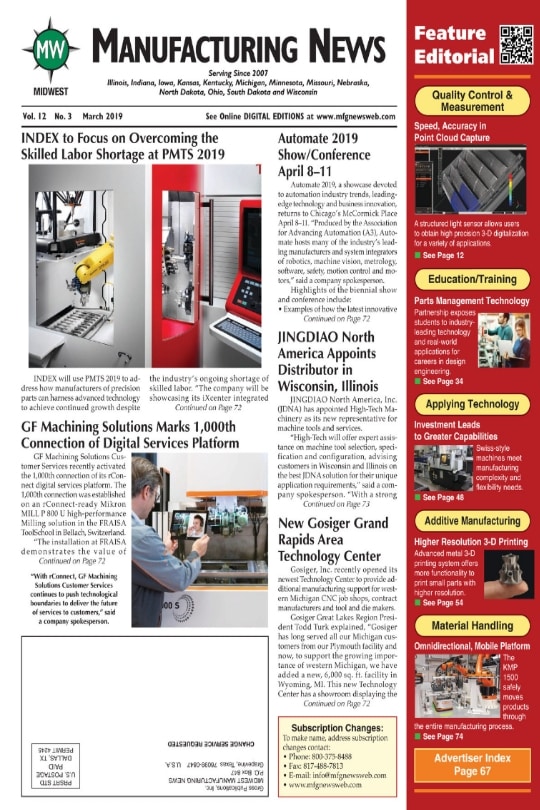 Machine Data Collection Updates
Updates and benefits of Predator MDC have been shared by Manufacturing News on page 90 of the Midwest issue.
Learn More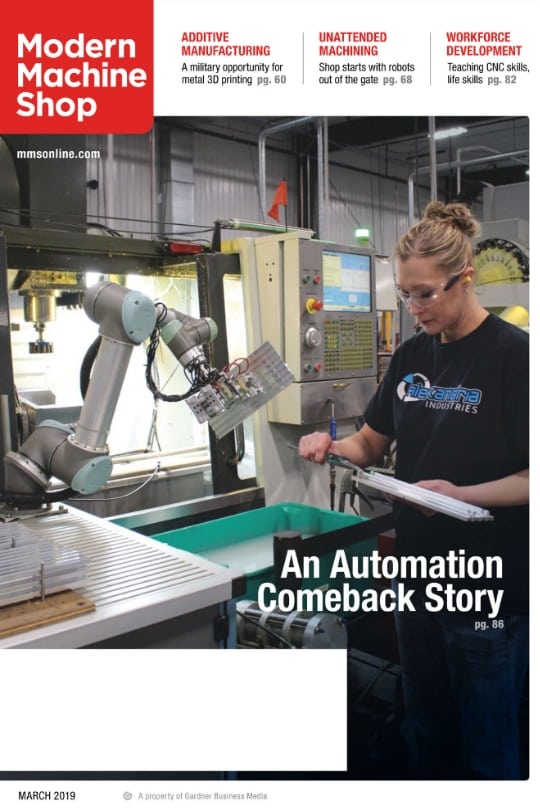 Rise Up Industries
Modern Machine Shop has featured Rise Up Industries in their recent issue. The educational program is local to us here in San Diego County and we are so excited they made the pages of this publication.
Learn More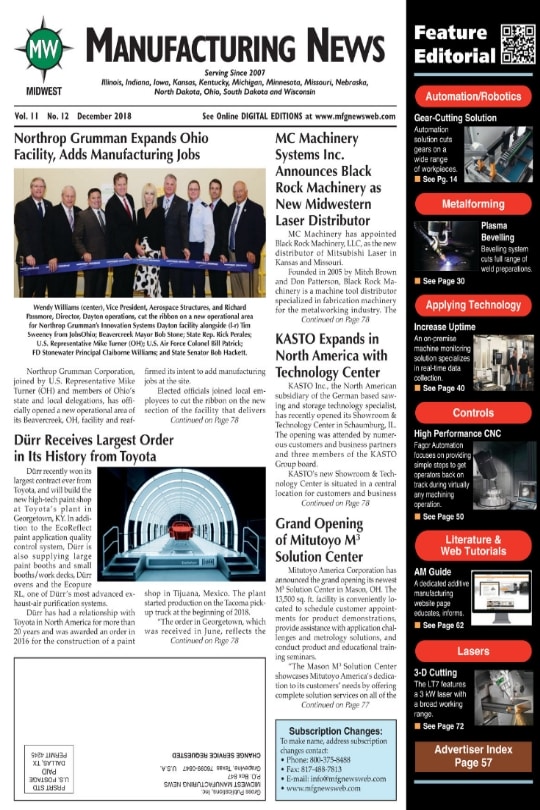 CNC MDC Case Study
R&D Manco in Arizona was featured in MFG News via a case study using Predator MDC from Shop Floor Automations.
Learn MoreYes. Many transportation suppliers operate a mix of newer machining centers alongside legacy Fanuc, Siemens, Mitsubishi, Okuma or Heidenhain controls that still provide significant production value. SFA specializes in connecting both modern and older machines through serial-to-Ethernet hardware, MTConnect adapters, FANUC FOCAS connectivity, OPC-UA interfaces and direct I/O methods. This allows manufacturers to gain real-time machine visibility and production data without large capital replacement projects.
For most manufacturers within transportation supply chains, the highest-value initial data points typically include:
Capturing these metrics often reveals bottlenecks that remain hidden within manual reporting processes and helps prioritize improvement initiatives ahead of OEM audits.
Centralized CNC program management through DNC and production data management systems helps eliminate uncontrolled workflows involving USB drives, local machine storage and shared folders. Approved revisions can be managed from a single controlled environment while maintaining revision history and ensuring operators access current programs.
IATF 16949 places significant emphasis on identification and traceability throughout production. Machine monitoring and DNC systems capture lot, shift and program-usage data automatically as parts are produced, reducing reliance on manual logs and helping manufacturers respond quickly and completely to OEM audit and traceability requests.
SFA deployment architectures can be configured around existing IT requirements and operational constraints. Options may include:
This allows manufacturing teams to modernize data visibility while aligning with existing infrastructure and security requirements.
Manufacturers frequently estimate capacity using historical assumptions rather than actual machine performance data. Machine monitoring provides real-world cycle times, utilization trends and setup duration data that can improve scheduling accuracy, identify available capacity and support more informed decisions ahead of OEM demand changes and program launches.