


Build a More Connected Manufacturing Operation for Heavy Equipment Production
Increase Production Visibility • Connect Legacy & Modern CNC Equipment • Improve Throughput Across Your Shop Floor
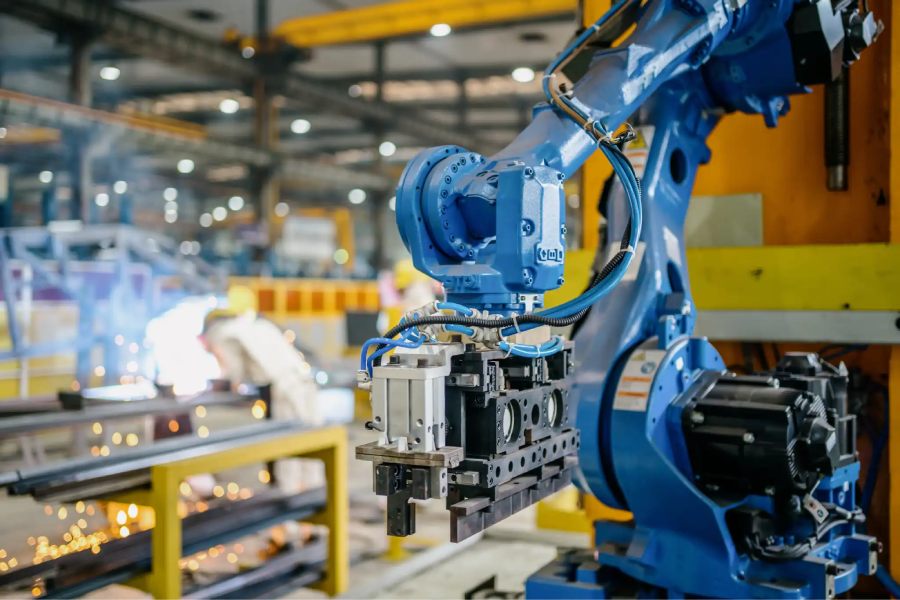
Heavy equipment manufacturers operate under constant pressure to increase production while maintaining quality, controlling costs, and meeting demanding delivery schedules. Whether you’re machining large structural components, fabricating hydraulic systems, producing drivetrain assemblies, or manufacturing replacement parts, every minute of machine downtime impacts productivity.
Many facilities continue to rely on proven CNC machines that have decades of productive life remaining, yet these machines often lack the connectivity needed for today’s manufacturing systems. At the same time, operations leaders need real-time production visibility while engineering and IT teams work to modernize manufacturing without disrupting production.
Shop Floor Automations (SFA) helps heavy equipment manufacturers connect legacy and modern machine tools, automate production data collection, improve CNC program management, and integrate shop floor equipment with ERP, MES, and business systems to maximize productivity.
The Challenges Facing Heavy Equipment Manufacturers

01 / MACHINE UTILIZATION
Maximizing Production Capacity
Large machining centers, boring mills, horizontal machining centers, lathes, fabrication equipment, and robotic welding cells represent major capital investments. Maximizing uptime and understanding true machine utilization is essential for improving profitability.
02 / LEGACY EQUIPMENT
Older CNC Machines Still Produce Critical Parts
Many manufacturers continue producing high-value components on legacy Fanuc, Siemens, Okuma, Mitsubishi, Mazak, Yasnac, and Heidenhain controls. Modern connectivity extends the value of these machines without costly replacements.
03 / PRODUCTION VISIBILITY
Manual Reporting Limits Decision Making
Production information often resides in spreadsheets, whiteboards, or paper logs, making it difficult to understand machine performance, downtime causes, or production bottlenecks in real time.
04 / CNC PROGRAM CONTROL
Managing Program Revisions Across Multiple Machines
Operators still transferring programs using USB drives or shared folders increase the risk of loading incorrect program revisions, resulting in scrap, rework, and unnecessary downtime.
05 / WORKFORCE
Preserving Manufacturing Knowledge
As experienced machinists retire, valuable setup procedures and machining knowledge can be lost. Standardized digital workflows improve consistency while helping onboard new operators more efficiently.
06 / CONNECTIVITY
Integrating the Shop Floor with Business Systems
Manufacturers increasingly need machine data to flow between CNC equipment, ERP systems, MES platforms, quality systems, and production scheduling software without manual data entry.
01 / MACHINE UTILIZATION
Maximizing Production Capacity
Large machining centers, boring mills, horizontal machining centers, lathes, fabrication equipment, and robotic welding cells represent major capital investments. Maximizing uptime and understanding true machine utilization is essential for improving profitability.
02 / LEGACY EQUIPMENT
Older CNC Machines Still Produce Critical Parts
Many manufacturers continue producing high-value components on legacy Fanuc, Siemens, Okuma, Mitsubishi, Mazak, Yasnac, and Heidenhain controls. Modern connectivity extends the value of these machines without costly replacements.
03 / PRODUCTION VISIBILITY
Manual Reporting Limits Decision Making
Production information often resides in spreadsheets, whiteboards, or paper logs, making it difficult to understand machine performance, downtime causes, or production bottlenecks in real time.
04 / CNC PROGRAM CONTROL
Managing Program Revisions Across Multiple Machines
Operators still transferring programs using USB drives or shared folders increase the risk of loading incorrect program revisions, resulting in scrap, rework, and unnecessary downtime.
05 / WORKFORCE
Preserving Manufacturing Knowledge
As experienced machinists retire, valuable setup procedures and machining knowledge can be lost. Standardized digital workflows improve consistency while helping onboard new operators more efficiently.
06 / CONNECTIVITY
Integrating the Shop Floor with Business Systems
Manufacturers increasingly need machine data to flow between CNC equipment, ERP systems, MES platforms, quality systems, and production scheduling software without manual data entry.
Manufacturing Solutions Designed for Heavy Equipment Production
SFA combines manufacturing software, industrial connectivity hardware, and implementation services to help heavy equipment manufacturers modernize production while leveraging existing equipment investments.
Machine Monitoring & Production Intelligence
Monitor machine performance in real time.
- Live machine status dashboards
- OEE and utilization reporting
- Downtime analysis
- Cycle time monitoring
- Production reporting
CNC Program Management
Control and distribute CNC programs from a centralized environment.
- Revision management
- Secure program distribution
- Program request workflows
- CAM integration
- Reduced setup errors
Modernize Existing CNC Equipment
Connect virtually any CNC regardless of age.
- RS232 to Ethernet connectivity
- MTConnect integration
- FANUC FOCAS connectivity
- OPC UA support
- Wired and wireless communication
Connect Manufacturing Systems
Bring production information together.
- ERP integration
- MES connectivity
- SQL database access
- API integration
- Automated production synchronization
Tool & Asset Tracking
Improve visibility of manufacturing resources.
- Tool tracking
- Fixture management
- Calibration monitoring
- Asset history
- Reduced search time
Professional Implementation Services
Deploy solutions that fit your manufacturing environment.
- Shop floor assessments
- Machine communication setup
- Software installation
- Operator training
- U.S.-based technical support
- Machine Connection
-
Flexible Deployment Options
Heavy equipment manufacturers often require solutions that integrate with existing manufacturing infrastructure while supporting internal IT standards.
SFA supports:
- On-premise deployments
- Virtual server environments
- Air-gapped manufacturing networks
- Segmented production networks
- Multi-facility reporting
Heavy Equipment Manufacturing Segments
| Industry Segment | Common Challenges | SFA Solutions |
|---|---|---|
| Construction Equipment | Large part machining, machine utilization | Predator MDC, DNC, DataXchange |
| Mining Equipment | Legacy CNC modernization | Connectivity hardware, Machine Monitoring |
| Agricultural Equipment | Production scheduling, program control | Predator DNC, PDM, ERP Integration |
| Material Handling Equipment | Mixed machine environments | DataXchange, MDC, Connectivity Services |
| Forestry Equipment | Capacity planning and downtime reduction | Machine Monitoring, OEE Dashboards |
| Industrial Equipment Manufacturers | Shop floor integration | DNC, ERP/MES Integration, Machine Connectivity |
How SFA Modernizes Your Heavy Equipment Manufacturing Operation

1. Evaluate Your Shop Floor
Review machines, controls, production workflows, and business objectives.
2. Design Your Infrastructure
Develop a deployment strategy aligned with production and IT requirements.
3. Connect Your Equipment
Implement hardware and validate machine communications.
4. Configure Software
Deploy dashboards, reporting, and production workflows.
5. Train Your Team
Provide documentation and operator training.
6. Continue Optimizing
Expand machine connectivity and improve operational performance over time.
1. Evaluate Your Shop Floor
Review machines, controls, production workflows, and business objectives.
2. Design Your Infrastructure
Develop a deployment strategy aligned with production and IT requirements.
3. Connect Your Equipment
Implement hardware and validate machine communications.
4. Configure Software
Deploy dashboards, reporting, and production workflows.
5. Train Your Team
Provide documentation and operator training.
6. Continue Optimizing
Expand machine connectivity and improve operational performance over time.
Common Questions
Can SFA Connect Older CNC Machines Used for Heavy Equipment Manufacturing?
Yes. SFA specializes in connecting both legacy and modern CNC controls using RS232, Ethernet, MTConnect, FANUC FOCAS, OPC UA, wireless networking, and industrial communication hardware.
What Production Data Should Heavy Equipment Manufacturers Capture?
Most manufacturers begin by collecting:
- Machine utilization
- OEE
- Downtime reasons
- Cycle times
- Production counts
- Setup time
- Program history
These metrics help identify bottlenecks and improve scheduling.
Can SFA Integrate With ERP and MES Systems?
Yes. SFA integrates machine data with ERP, MES, scheduling, and reporting systems through SQL databases, APIs, and manufacturing integrations.
Can Existing Machines Be Modernized Without Replacement?
Absolutely. Many manufacturers extend the useful life of existing CNC equipment by adding Ethernet connectivity, wireless communication, machine monitoring, and centralized DNC software rather than replacing productive machines.