


Tag Archive: legacy cnc machine security
When Machines Can’t Meet the Network Rules
Comments Off on When Machines Can’t Meet the Network RulesThe “significant security vulnerabilities” of SMBv1 that Microsoft warns of, which have exposed companies to crippling ransomware attacks like the infamous NotPetya, are often the same legacy protocol that can still be found on some CNC controllers today.
“The original SMB1 protocol is nearly 30 years old, and like much of the software made in the 80’s, it was designed for a world that no longer exists. A world without malicious actors, without vast sets of important data, without near-universal computer usage.” — Ned Pyle
But there’s not necessarily a simple fix for manufacturers. Remove SMBv1, acknowledges the software giant, and you can break compatibility with older equipment and software. You could try to isolate vulnerable systems or use port blocking and other compensating controls to reduce exposure. Or you can continue to run SMBv1, exposing your shop, and potentially your value chain, to cyberattacks, debilitating downtime, exorbitant costs and the loss of customer trust.
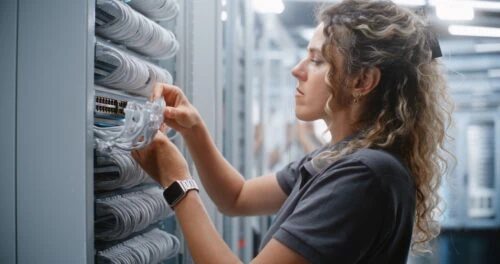
The challenge with machinery running SMBv1 is to preserve the communication it needs for production while creating a controlled connection that limits unnecessary network access and exposure.
Each approach addresses part of the problem, but none necessarily addresses the fundamental production challenge: How do you keep productive legacy equipment connected without leaving the door open to the network threats it was never designed to withstand?
For manufacturers, the answer may not be replacing the machine, patching around the problem, adding layers of microsegmentation and isolation or simply accepting the risk. It may be finding a more controlled way to connect it.
A Familiar Standoff
That’s the tension manufacturers live with every day, even without a headline-making cyberattack to force the issue.
On one side, IT and cybersecurity teams are accountable for reducing exposure. They see an outdated protocol as a potential entry point, particularly when a machine sits on a network that also touches business systems, suppliers or other production assets.
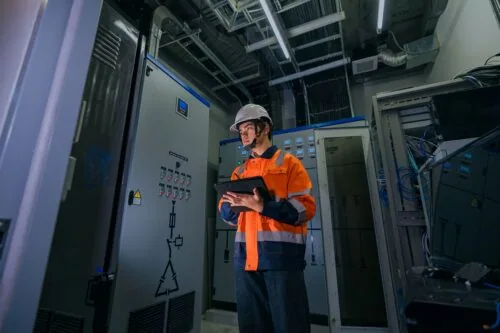
IT teams need visibility into what your aging equipment communicates, with which systems, over which protocols and ports and in which direction, including the files, applications or services required for production.
On the other hand, operations sees a machine that needs to run. That CNC may be producing parts that customers are waiting for, tied to a validated process or simply too costly and disruptive to replace. Engineering knows the controller’s limitations, the tooling is dialed in and the process works.
Neither side is wrong.
That’s where the discussion needs to move beyond “turn it off” or “leave it alone,” to whether manufacturers can separate the equipment’s production requirements from the network exposure that comes with its legacy technology.
The Architecture to Accommodate Both
Production and IT teams should have a shared understanding of what the aging machine actually needs to communicate in order to find a way to give it that connection without opening the rest of the network to unnecessary exposure.
NIST’s OT security guidance takes a similar approach. Its recommendations recognize that manufacturing systems have different performance, reliability and safety requirements than traditional IT environments, while calling for network segmentation and controlled boundaries between systems to limit access and manage data flows.
That means teams should start with the equipment rather than the protocol by taking these steps to help plan out the process:
- What actually depends on SMBv1? Identify the machine(s), controller(s) or application(s) and understand why it/they need the legacy protocol.
- What needs to move and where? Map the CNC programs or other production data, their source and destination and the path they currently take across the network.
- What can be separated? Use segmentation, firewalls, access controls or other compensating controls to restrict the legacy equipment’s exposure without disrupting the production process.
- Can the connection itself be changed? Rather than relying on Windows shares or SMB to move CNC programs, a purpose-built DNC connection can provide a controlled path for transferring production files to and from equipment. Predator Secure DNC, for example, is designed to transfer files to CNC equipment through firewalls while eliminating dependencies on corporate domains, workgroups and Windows file shares.
- What is the long-term plan? Document the exception, the controls around it and the conditions that would eventually trigger an equipment or controller upgrade.
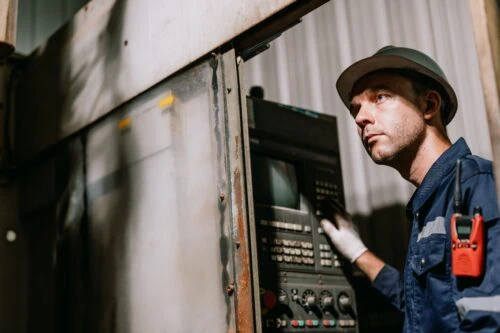
Production needs a clear understanding of what data the machine needs to send and receive, with which systems and for what production purpose, in order to assist IT in designing connectivity around those essential requirements while limiting unnecessary network exposure.
A Different Way to Connect
In the quest to minimize security vulnerabilities, the goal isn’t necessarily to make a legacy machine conform to a network architecture it was never designed for. The goal is to understand what the machine needs to do its job and then design the connection around those requirements.
That could mean segmentation at the network level, tightly-controlled firewall rules, isolation of particularly vulnerable equipment and other compensating controls. In some environments, it may also mean replacing a legacy Windows file-sharing dependency with a purpose-built DNC connection.
A solution like Predator Secure DNC can be part of that approach, providing a controlled path for CNC program transfers without relying on corporate domains, workgroups or Windows shares. But software alone doesn’t solve the problem. The right architecture depends on the machines, controllers, network environment and production requirements already in place.
Shop Floor Automations, as a manufacturing integrator, brings together the equipment, connectivity hardware, software and implementation expertise needed to work through that gap. SFA assesses the existing machine and network environment, identifies the communication requirements, helps design the connectivity architecture, deploys the appropriate hardware and software and validates the result with the teams responsible for IT, engineering and production.
The result can mean fewer exceptions to manage and a known production process that keeps reliable machines running. It also creates something more valuable than a workaround: a practical path toward a more secure shop floor without treating every aging machine as a replacement project or major IT burden.
If you’re looking to connect aging and/or vulnerable equipment without creating a new IT problem, talk with an SFA manufacturing integration expert today.