
Skip to Content
Exit

Tag Archive: cybersecurity

Isolate Your CNC Network, Not Your Production

Comments Off on Isolate Your CNC Network, Not Your Production

There was an imaginary moat that once existed between IT and the shop floor. It used to feel like protection, safely guarding teams around their specializations – whether pumping out parts or ticket resolutions.

Today, it feels like exposure. Cybersecurity experts note that traditional “air-gapped” assumptions are breaking down as Industry 4.0 connects once-isolated machines to networks, USB drives and remote access pathways. Especially for manufacturers handling defense, aerospace or medical device parts, that shift has turned everyday habits into compliance and cybersecurity liabilities.

Secure CNC File Transfers for CMMC

The ability of threat actors to penetrate networks, says global cybersecurity leader ESET, has become easier with the use of network protocols built on top of publicly documented internet protocols, human/machine interfaces and other computing devices that run familiar OS and adoption of IIoT devices.

When Audits Get Real

Picture a plant that looks like the many you know: rows of CNCs, a busy programming office and a shop floor where hitting the schedule is non‑negotiable. The company has grown into defense work, signed DFARS clauses and hears CMMC 2.0 mentioned in every customer review meeting. But in the rush of production, file movement still runs on muscle memory.

Then comes the CMMC audit.

An assessor makes a simple request: “Walk me through how this CNC program traveled from the engineer’s workstation to this machine.”  The real response may be a shared folder with broad permissions, or a thumb drive passed between machines. Maybe an e-mail attachment when someone was in a rush.

What once felt effective now looks like uncontrolled data movement.

Standards like NIST 800-171 and CMMC 2.0 place clear emphasis on media protection, access control and traceability, especially when handling Controlled Unclassified Information (CUI). In the audit room, “we’ve always done it this way” becomes a risk statement.

Balancing “Lock It Down” with “Keep It Running”

Leadership often issues a mandate: tighten security, eliminate unmanaged USBs and reduce lateral movement across networks.

But operations departments live by different metrics: spindle uptime, on-time delivery and scrap rates. If security controls create too much friction at the machine, shadow workflows return.

This is the core tension in Operational Technology (OT) security. Lock down VLANs and disable ports – but leave operators dependent on untracked USB transfers to legacy CNCs – and you create the worst of both worlds: IT complexity and invisible audit exposure.

The question isn’t whether to isolate. It’s how to isolate without isolating production.

Build A More Practical Bridge

That’s where structured DNC, an industrial networking software solution that transfers your CNC program and production data for all of your equipment, and controlled program delivery come in.

Bridge the Air Gap Between IT and the Shop Floor

Manufacturing integrators like Shop Floor Automations help manufacturers replace ad-hoc USB transfers with secure, centralized file distribution built for OT environments. Instead of programs walking across the floor on thumb drives:

  • Files move through a single, secure DNC network engineered for industrial systems
  • Revision control ensures only the released version reaches the machine
  • Machine-level traceability logs who sent what file, from where and when
  • Role-based access controls restrict who can upload, modify or release CNC programs

Now the audit question: “How did this program get here?” The answer becomes a report, not a debate.

This approach aligns security requirements with production reality. Operators no longer chase files. Engineers don’t wonder which version is running. IT gains compliance without blocking the floor.

Control CNC Program Access - Shop Floor Automations

Manufacturers in regulated supply chains understand that CNC network isolation is critical to achieving CMMC 2.0 and related frameworks. But isolation doesn’t have to mean that production is secluded from the rest of the business when proper controls are instituted.

Making Isolation Work in Practice

Shops that successfully (and securely) separate networks and machines share three traits:

  1. Aligned ownership. Corporate policy and IT define guardrails; manufacturing engineers define workflow. Security becomes enforceable without becoming unworkable. All stakeholders should be vested in the project for long-term adoption and compliance.
  2. Legacy-aware solutions. Most facilities run mixed equipment. Older machines weren’t designed for today’s segmentation or encryption standards. Purpose-built OT tools, including integrated CNC hardware, secure DNC software and production data management (PDM) software, meet modern standards without forcing cost-prohibitive equipment replacement.
  3. Clear documentation and training. Technical controls only work well when paired with easy-to-follow work instructions, role-based permissions and expert guidance that’s available via phone or onsite consultation.

When these attributes come together, manufacturers not only become audit-ready but operationally confident. Operators trust that the file at the machine is current and approved. Plant management sees improvements to productivity, efficiency and turnover on the floor. Leadership trusts that compliance risk is controlled.

From Liability to CMMC 2.0 Compliant-File Transfers

Manufacturers in regulated supply chains understand that network isolation is critical to achieving CMMC 2.0 and related frameworks. But isolation doesn’t have to mean that production is secluded from the rest of the business.

When implemented thoughtfully, that is, with secure DNC networking, centralized revision control and full traceability, cybersecurity becomes an operational advantage that evolves past compliance to greater accuracy, less carryover workflows and better productivity.

If your answer to “How did this program reach that machine?” still involves shared drives and anonymous USBs, take on your digital moat with the technical experts at Shop Floor Automations to set up CMMC 2.0 compliant-CNC file transfers to safeguard your production runs, and your manufacturing business.

Tag Archive: cybersecurity

The Extended Lifeline of Windows 10 is a Ticking Clock for Manufacturers

Comments Off on The Extended Lifeline of Windows 10 is a Ticking Clock for Manufacturers

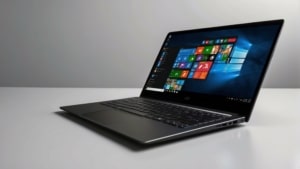
Last month Nucor, North America’s largest steel producer, acknowledged a cybersecurity incident involving unauthorized third-party access to certain IT systems, reported Reuters. As a precaution, Nucor temporarily halted production at multiple facilities while forensic teams and external cybersecurity experts investigated the breach and worked to contain its impact. Nucor’s incident is just one example of how cyber threats exploit aging digital infrastructure – and for many manufacturers, that infrastructure often includes Windows 10. But with Windows 10 reaching end of support on October 14, 2025, there is a deeper risk for shops that continue to rely on aging CNC infrastructure.

Aging CNC infrastructures impact cybersecurity and operational efficiency

This year, manufacturers that don’t upgrade their Windows 10 machines risk missing critical OS-level security updates and losing compatibility with third-party solutions.

The New Reality of Windows 10 End of Life on CNCs

This year Windows 10 will no longer receive critical OS-level security updates. While support for Microsoft 365 apps on Windows 10 has been extended until October 2028, it’s far from a solution for the shop floor. It still means legacy CNC systems and other production technologies running on Windows 10 will become more vulnerable, not less. Compounding the risk, third-party vendors are already phasing out software support, while next-generation manufacturing platforms – from IIoT to real-time analytics – require compatibility with newer operating systems like Windows 11 and Server 2022. The gap between resilient, future-ready IT strategies and older shop floor systems is widening. This blog post explores what manufacturers can, and must, do to close that gap before it spreads into a serious operational liability.

The USB Epidemic: When Compliance and Productivity Collide

For many manufacturers still operating CNC equipment running on Windows 2000, XP or early versions of Windows 10, network segmentation or USB-based file transfers have become the go-to workaround for such outdated systems. However, this tactic is increasingly risky.

CNC program transfers with Windows 10

Running USB-based CNC file transfers have become the go-to workaround using Windows 10 and other outdated systems. However, this tactic is increasingly risky, exposing manufacturers to ransomware events, CMMC noncompliance and operational inefficiencies.

According to Honeywell’s 2022 USB Threat Report, “52% of threats are specifically designed to utilize USB removable devices,” with the vast majority of those threats able to disrupt industrial systems. Pair these threat actors with unsupported software, says Virgina Tech associate professor Lee Vinsel in a recent BBC article, and “there are all kinds of opportunities for failure here, especially when…companies stop supporting old software. Cybersecurity is a huge worry around this issue.” The Department of Defense well understands this concern. Its Cybersecurity Maturity Model Certification (CMMC) 2.0 framework prohibits unmonitored file transfers and insecure endpoints – meaning non-compliance can result in disqualification from federal contracts.

Operational inefficiencies further intensify the risk. Poor CNC program version control and manual CNC program transfers can cost production hours and potentially lower quality output as a result of incorrect or outdated G-code files being loaded at the machine.

Closing the Gap

Rather than investing millions in full machine replacements, many manufacturers are turning to modern Distributed Numerical Control (DNC) systems to serve as their secure industrial network. Solutions like Predator Secure DNC offer targeted upgrades that align with industry compliance frameworks and cyber-hardening strategies. IT and operational leaders can isolate legacy equipment from domain threats, centralize logging across mixed-machine environments, like Fanuc, Okuma, Mazak and others, and meet NIST SP 800-171 encryption standards via FIPS 140-2 validated cryptography.

The Cost of Complacency

Doing nothing may be the most expensive option. The global average cost of a data breach soared to 4.88M, the highest total ever, according to a 2024 IBM report.

For a temporary and limited reprieve, Microsoft offers an Extended Security Updates (ESU) for Windows 10 that starts at $61 per device Year One, with pricing doubling every consecutive year for a maximum of three years after the end of support for Windows 10. Even so, there is no extended Microsoft ESU option after this time period.

Plotting Your Path

To mitigate the risk of your manufacturing operations, IT and operations should take the following steps to prepare for the end of Windows 10 support:

Windows End of Life on CNCs

  1. Conduct a CNC Operating System (OS) and network audit before Q3 2025, identifying all legacy systems still running Windows 10 or earlier.
  2. Prioritize upgrades for machines processing sensitive IP or DoD-controlled projects.
  3. Implement secure DNC options along with Microsoft’s ESU to support phased migrations and DNC retrofits while maintaining compliance and uptime.

Maximizing Grace Periods

Microsoft’s 365 extension for Windows 10 is not a pardon, it’s simply a grace period. Manufacturers who fail to act may find themselves next in line for a costly ransomware event or compliance failure.

Manufacturing integrator Shop Floor Automations (SFA) has worked with hundreds of manufacturers to navigate such transitions securely and efficiently. The path to a resilient, connected shop floor doesn’t begin with rip-and-replace – it starts with informed decisions and trusted partners.

To receive technical guidance for your manufacturing operations, contact the experts at SFA now.